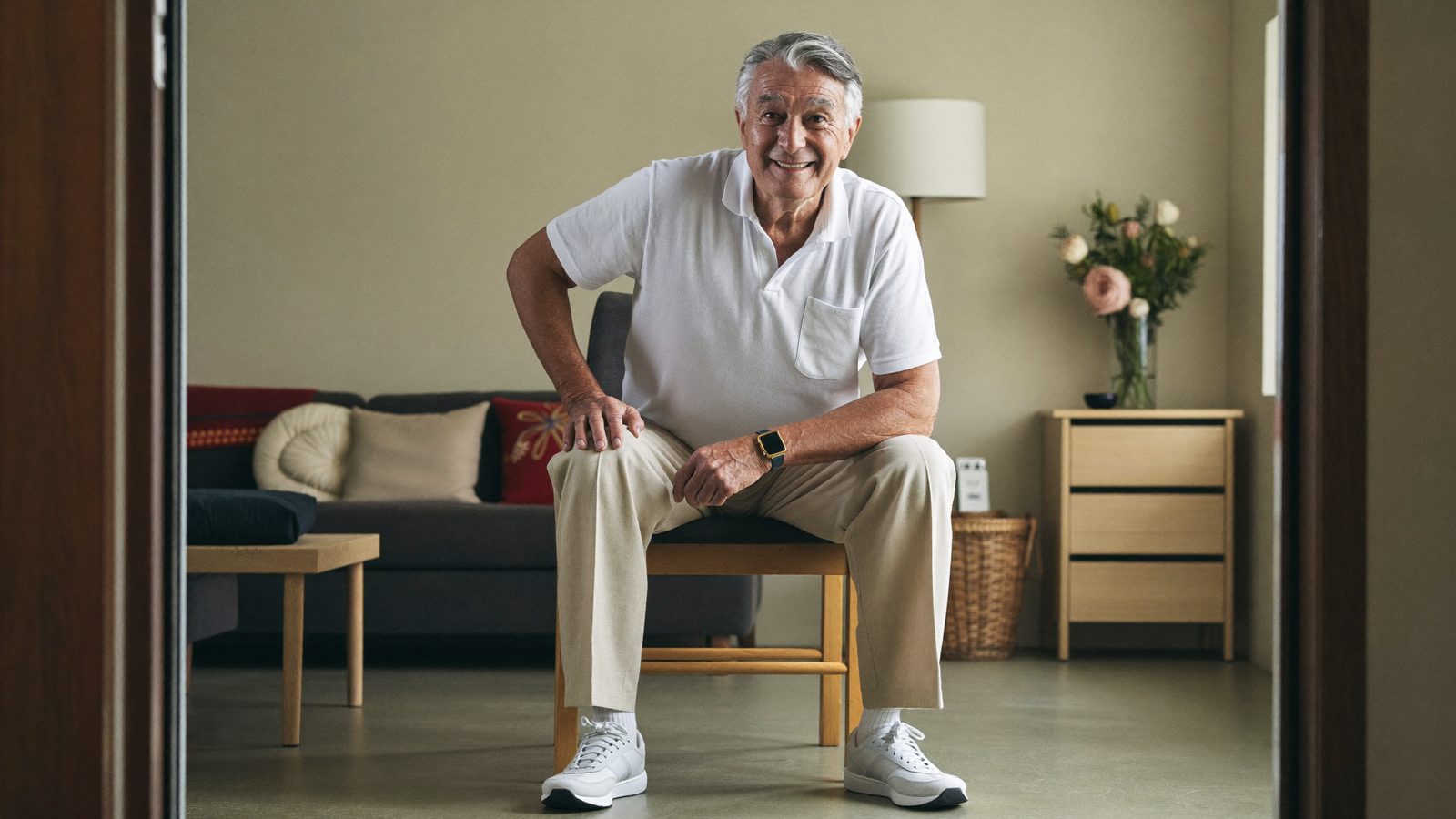
Balance is not something we either have or do not have. It is a skill, and like any skill, it responds to practice. The steadiness you had at 50 did not disappear at 75. It just needs regular reminders.
The five exercises below are gentle, need no equipment beyond a sturdy chair, and take only a few minutes. Physical therapists teach versions of these to people of nearly every ability level. Start where you are, go slowly, and let consistency do the work.
Safety first, always
Before you begin, set yourself up to succeed:
- Use a sturdy chair. Pick one with a solid back that will not slide, placed on a non-slip surface. A kitchen counter works too.
- Clear the floor. No rugs, cords, or clutter within arm's reach of where you practice.
- Have someone nearby at first. For the first week or two, practice when a family member, friend, or neighbor is around.
- Wear supportive shoes. Skip the socks and loose slippers.
- Stop if you feel dizzy. Sit down, rest, and mention it to your doctor. Mild muscle effort is expected. Dizziness, chest discomfort, or pain is a signal to stop.
1. Heel-to-toe stand
This one challenges your balance by narrowing your base, the same skill you use walking through a doorway or down a hall.
- Stand next to your chair or counter with one hand resting on it.
- Place one foot directly in front of the other, heel touching toe, like standing on a tightrope.
- Hold the position for 10 seconds. Keep your eyes forward, not down.
- Switch feet and repeat. Work up to 30 seconds on each side.
2. Single leg stand with chair support
Standing on one leg strengthens the small stabilizing muscles in your hips and ankles that quietly keep you upright all day.
- Stand behind your chair with both hands on the back of it.
- Slowly lift one foot a few inches off the floor, bending that knee slightly.
- Hold for 10 seconds, then lower the foot with control.
- Repeat on the other side. Do 3 holds per leg. As you improve, try one hand, then one fingertip, on the chair.
3. Sit-to-stand
This is the single most useful strength exercise for daily life. Every time you rise from a chair, the toilet, or the car, you are doing a sit-to-stand.
- Sit toward the front of your chair, feet flat and hip-width apart.
- Lean slightly forward, push through your heels, and stand up. Use your hands on the armrests only if you need them.
- Lower yourself back down slowly and with control. No plopping.
- Repeat 5 times. Build toward 10, and toward standing with no hands at all.
4. Heel raises
Strong calves and ankles act like shock absorbers, catching you when a step is uneven or a curb surprises you.
- Stand behind your chair with both hands on it, feet hip-width apart.
- Slowly rise up onto the balls of your feet, lifting your heels as high as comfortable.
- Pause for a second at the top, then lower slowly.
- Repeat 10 times. Rest, and do a second set if you feel good.
5. Gentle side leg raises
The muscles on the outside of your hips keep you from swaying sideways, which is where many falls begin.
- Stand behind your chair, holding the back with both hands.
- Keeping your leg straight and your toes pointing forward, slowly lift one leg out to the side a few inches.
- Hold for a second, then lower with control. Keep your back straight and avoid leaning.
- Repeat 10 times on each side.
How often: a few minutes daily beats an hour weekly
Balance improves through frequent, small doses. Five to ten minutes a day, most days of the week, will do far more than one long session on Saturday. Many people tie the exercises to a daily habit: while the coffee brews, during a commercial break, or right after brushing their teeth. The routine matters more than the intensity.
Signs of progress to watch for
Within a few weeks, most people notice small but meaningful changes: holding the single leg stand longer, rising from a chair without using their hands, feeling steadier stepping into the shower, or walking with more confidence on uneven sidewalks. Keep a simple note of your holds and repetitions. Watching the numbers grow is encouraging, and it gives your doctor useful information too.
When to ask a doctor first
Check with your doctor before starting if you have fallen in the past year, feel dizzy or unsteady regularly, have significant joint pain, have a heart condition, or take medicines that affect balance. This is not a hurdle. It is a chance to get a routine tailored to you, and your doctor may refer you to a physical therapist who can fine-tune these very exercises.
Practice with neighbors: community classes
Balance practice is easier, and honestly more fun, with company. Many senior centers and community rooms across the San Fernando Valley, Conejo Valley, and Ventura County offer low-cost and donation-based balance and gentle exercise classes. And this August, you are warmly invited to ours.
Community events this August. Join us for "Fall Prevention: Steady and Independent" at Oak Creek Senior Villas in Thousand Oaks (Tuesday, August 25, 11:00 AM), where we will practice steadiness skills together, and "Medicare Help Made Simple, Plus a Popsicle" at Budlong Manor Apartments in Lake View Terrace on Friday, August 14, 1:30 to 2:30 PM. Both are educational and bilingual, with no enrollment and no sales pitch. See event details here.
Steadiness is independence. A few quiet minutes a day, holding the back of a kitchen chair, is one of the most powerful investments you can make in the years ahead.
This article is general information, not medical advice. Talk with your doctor about your personal situation.
Questions About Medicare or Staying Healthy After 65?
Schedule a no-pressure conversation. I am here to help you protect your health and your independence.
Schedule a Consultation