No-Cost Community Guide

The Fall Prevention Guide: A Room by Room Plan for Staying Steady and Independent

Most falls are preventable. This guide walks through your risk, your home, your habits, and exactly what to do if a fall happens, with a printable checklist you can start using today.

Start the Room by Room Plan
Confident senior woman walking steadily through a bright, uncluttered hallway at home
Why Falls Matter Know Your Risk Room by Room Build Your Balance Medications Vision and Footwear If a Fall Happens For Families Checklist Resources
Section 1

Why Falls Matter

Falls are the leading cause of injury for adults 65 and older, and they are far more common than most people realize. According to the CDC, one in four adults age 65 or older falls each year. Yet fewer than half of them tell their doctor.

1 in 4
Adults 65+ falls each year (CDC)
2x
Falling once doubles the chance of falling again
Most
Falls happen at home, in familiar rooms
Yes
Most falls are preventable with simple changes

Here is the part that matters most: most falls are preventable. They are not an inevitable part of aging. They are usually the result of a fixable mix of factors, such as a loose rug, a medication side effect, weakening leg muscles, or a dark hallway.

There is one more pattern worth naming. After a fall, or even a near miss, many people become afraid of falling again. That fear leads them to move less. Moving less weakens legs and balance, and weaker legs and balance increase the risk of the next fall. The goal of this guide is to break that cycle with confidence, not caution tape: a safer home, a stronger body, and a clear plan.

Section 2

Know Your Personal Risk

Fall risk is personal. Two neighbors of the same age can have very different risk levels. Ask yourself these questions honestly:

  • Have I fallen in the past year, even a small stumble I caught myself from? A previous fall is the single strongest predictor of a future one.
  • Have I noticed changes in my balance, such as steadying myself on furniture as I walk through the house?
  • Has my vision changed, or is it overdue for a checkup?
  • Do I take four or more medications, including over-the-counter medicines and supplements? The more medications in the mix, the higher the chance of dizziness or drowsiness.
  • Does my home have hazards like loose rugs, clutter in walkways, dim lighting, or stairs without rails?

The "Timed Up and Go" idea, in plain language

Doctors use a simple screening called the Timed Up and Go test. You sit in a sturdy chair, and on "go" you stand up, walk about ten feet, turn around, walk back, and sit down, at your normal pace. If that takes more than about 12 seconds, it is a sign your strength or balance deserves attention.

You can try the concept at home with a family member and a phone timer, but treat it as a conversation starter, not a diagnosis. If it feels slow or wobbly, mention it to your doctor. That one sentence, "I would like to talk about my fall risk," opens the right doors.

Answering yes to even one of these questions does not mean a fall is coming. It means you have found the exact place where a small change buys real safety.
Section 3

The Room by Room Home Plan

Walk through your home with fresh eyes, one room at a time. Most of these fixes cost little or nothing, and none of them require giving anything up.

Entryway

  • Keep the path from the door clear of shoes, bags, and packages.
  • Add a sturdy chair or bench for putting shoes on while seated.
  • Make sure the doorway light works and the switch is reachable from the door.
  • Secure or remove the doormat, inside and out.

Living Room

  • Route electrical and charger cords along walls, never across walking paths.
  • Remove or tape down throw rugs, or use non-slip pads under them.
  • Keep a clear, straight walking route between the seating area and the hallway.
  • Choose chairs with armrests that help you stand, and avoid very low, soft couches if standing up from them is a struggle.

Kitchen

  • Store everyday items between waist and shoulder height so you rarely need to reach high or bend low.
  • If you must reach something high, use a sturdy step stool with a handrail, never a chair.
  • Wipe up spills the moment they happen.
  • Consider a non-slip mat in front of the sink.

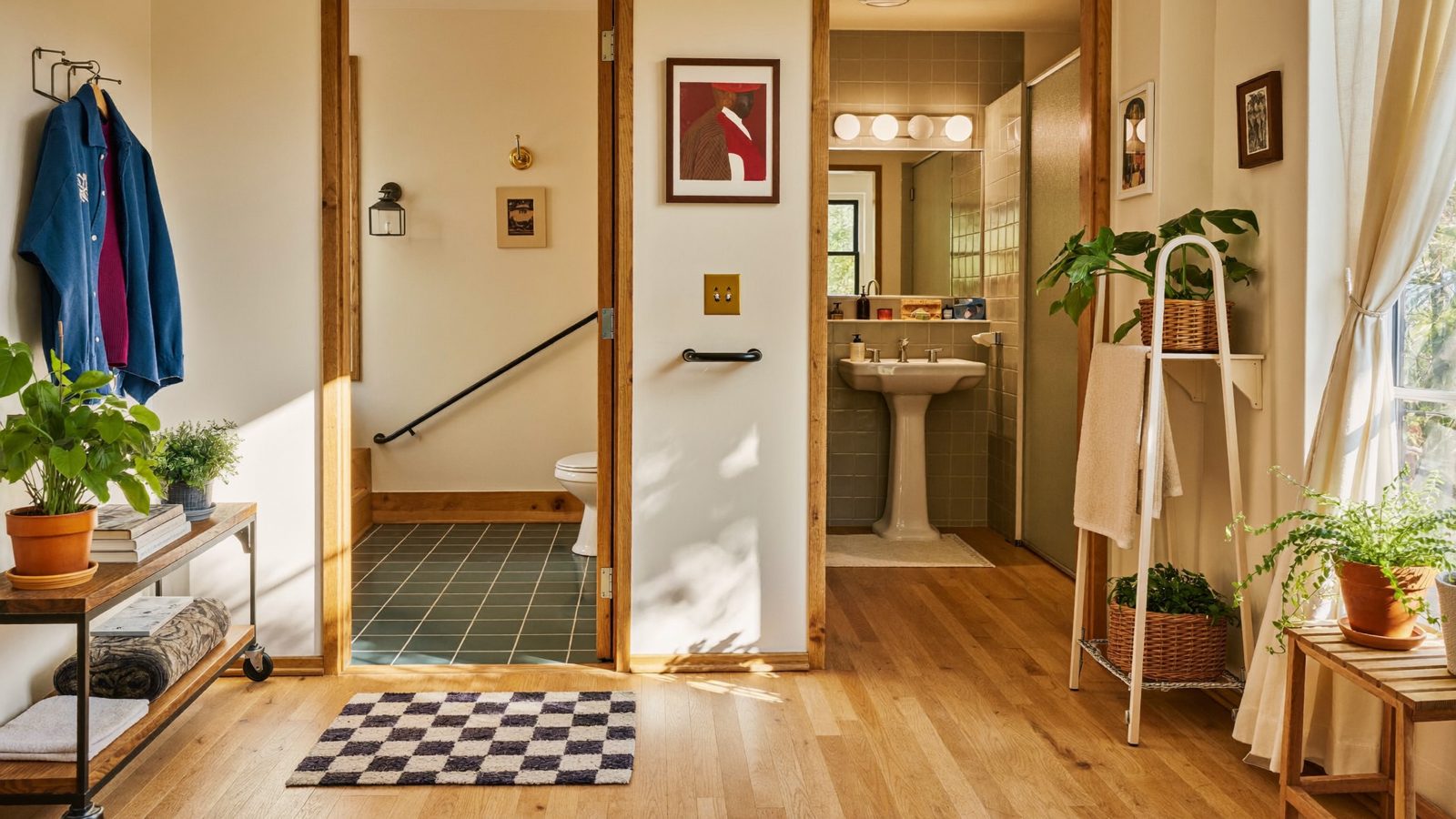
Bathroom

  • Install grab bars inside the shower or tub and next to the toilet. Towel bars are not grab bars, and they will not hold your weight.
  • Use non-slip mats or adhesive strips in the tub and on the floor beside it.
  • Consider a shower chair and a handheld showerhead so you can bathe seated.
  • Add a night light so the midnight trip is never made in the dark.

Bedroom

  • Place a lamp within arm's reach of the bed, plus a night light along the path to the bathroom.
  • Keep a phone within reach of the bed, whether a cell phone charging on the nightstand or a cordless handset.
  • Sit on the edge of the bed for a moment before standing, especially at night, to let your blood pressure catch up.
  • Keep slippers with backs and non-slip soles beside the bed, not loose slide-ins.

Stairs and Hallways

  • Every staircase needs a sturdy handrail, ideally on both sides, and it should run the full length of the stairs.
  • Light switches belong at both the top and bottom of the stairs.
  • Mark the edge of the top and bottom steps with contrasting tape if they blend together visually.
  • Never leave items sitting on the steps, even for a moment.

Outdoors

  • Coil hoses and store them off the walkways, every time.
  • Repair or clearly mark uneven pavement, lifted sidewalk edges, and loose pavers.
  • Add lighting along paths, at steps, and at the front and back doors. Motion-sensor and solar lights make this easy.
  • Keep steps free of leaves, moss, and clutter, and add a rail to any outdoor steps that lack one.
Section 4

Build Your Balance

A safe home is half the plan. The other half is a body that can catch itself. Strength and balance respond to practice at every age, and the exercises that matter most are gentle ones done regularly.

Five gentle exercises to ask your doctor about

  1. Sit to stand. From a sturdy chair, stand up and sit back down slowly, using your hands as little as possible. This builds the exact leg strength that prevents falls.
  2. Heel to toe walk. Walk a short line placing the heel of one foot directly in front of the toes of the other, using a countertop for support as needed.
  3. Single leg stand. Hold the back of a chair and lift one foot slightly off the floor, working up to ten seconds per side.
  4. Heel and toe raises. Holding the counter, rise onto your toes, lower, then rock back onto your heels. This strengthens ankles, your first line of defense on uneven ground.
  5. Side leg raises. Holding the chair, lift one leg out to the side and lower it slowly. Strong hips keep your steps steady.

Start with a few repetitions, stop if anything hurts, and check with your doctor before beginning any new exercise routine.

Walking programs and community classes

A regular walking habit, even 20 to 30 minutes most days, maintains the leg strength and stamina that protect you. If motivation is the hard part, company solves it. Many senior centers in the San Fernando Valley, Simi Valley, and the Conejo Valley offer balance classes, gentle yoga, and tai chi, which has some of the strongest evidence of any activity for reducing falls. Classes also add the two ingredients no home program has: a schedule and friends who notice when you skip.

Section 5

Medications and Fall Risk

Some medications, and especially certain combinations of them, can cause dizziness, drowsiness, blurred vision, or drops in blood pressure when you stand. Any of those can lead to a fall, and the risk grows with each medication added to the routine.

Two habits keep this risk managed:

  • An annual medication review. Once a year, go through everything you take with your doctor and ask a simple question: "Could any of these, or any combination of these, affect my balance?"
  • The brown bag check. Put every medication you take into a bag, including over-the-counter medicines, vitamins, and supplements, and bring it to your pharmacist. Pharmacists do these reviews all the time, and they often spot interactions and duplicates that no single doctor sees.

If you notice new lightheadedness after any medication change, tell your doctor right away rather than waiting for the next appointment. And never stop or adjust a medication on your own.

Section 6

Vision, Hearing, and Footwear

Vision

Your eyes are half of your balance system. Get a full eye exam every year, keep prescriptions current, and treat cataracts and other conditions promptly. One caution worth knowing: bifocal and progressive lenses can distort depth perception when you look down, which makes stairs and curbs riskier. Take stairs slowly in bifocals, and ask your eye doctor whether single-vision glasses make sense for walks.

Hearing

Hearing plays a quiet role in balance too. The inner ear houses the body's balance sensors, and untreated hearing loss is linked to higher fall risk. If family members say the television keeps getting louder, a hearing check is a fall prevention step as much as a hearing one.

The shoe checklist

  • Fits snugly, with no slipping at the heel.
  • Closed back. Backless slippers and slides are the riskiest footwear in the house.
  • Non-slip sole with real tread.
  • Low, wide heel.
  • Fastens securely with laces, straps, or Velcro, and gets retied the moment laces loosen.
  • Worn indoors too. Socks on hard floors cause many falls at home.
Section 7

If a Fall Happens

Even with a solid plan, falls can happen. Knowing what to do next protects you from the two biggest dangers after a fall: getting up the wrong way, and staying silent about it.

How to get up safely, step by step

  1. Stay still for a moment. Take a few breaths and check your body for pain before you move. If anything feels seriously wrong, do not get up. Call for help.
  2. Roll onto your side, then push up onto your hands and knees slowly.
  3. Crawl to a sturdy piece of furniture, such as a solid chair or the edge of a bed.
  4. Place your hands on the seat and slide one foot forward so it is flat on the floor, keeping the other knee down.
  5. Push up slowly with your arms and your front leg, and turn to sit on the chair.
  6. Rest before standing, and stay seated until you feel completely steady.

When to call for help

Call 911 if there is significant pain, a possible head injury, bleeding that will not stop, or if you cannot get up. If you are simply unable to rise but not injured, keep warm, move to a carpeted area if you can, and use your phone or alert device to reach someone.

Tell your doctor, even if you feel fine

This step gets skipped the most, often out of embarrassment or the worry that admitting a fall means losing independence. The opposite is true. A fall is medical information. It may be the first visible sign of a medication issue, a blood pressure change, or a vision change that is easy to fix. Telling your doctor about every fall, and every near fall, is how small problems stay small.

Medical alert options, in general terms

If you live alone or spend long stretches of the day alone, consider some form of alert system: a wearable button, a smartwatch with fall detection, or a voice assistant that can place calls. Features and costs vary widely, so compare a few. The right one is whichever you will actually wear and use.
Section 8

A Conversation Guide for Families

Adult children often see the risks before their parents are ready to talk about them. Raising the topic well makes all the difference between a productive conversation and a defensive one.

  • Lead with independence, not fear. "I want you to be able to stay in this house for years" lands better than "I am worried you are going to fall."
  • Make it about the house, not the person. Offering to fix a rug, add a grab bar, or improve the lighting criticizes the hallway, not your parent.
  • Do it together. Walk through the checklist below as a team, and let your parent lead the walk.
  • Offer choices, not orders. "Would you rather we tape down this rug or replace it?" keeps your parent in the driver's seat.
  • Share the load. One sibling can handle the hardware store run, another the doctor's visit question list.
  • Respect the pace. If today's answer is no, the seed is still planted. Revisit gently rather than pushing.

And if your parent has already fallen, resist the urge to wrap them in bubble wrap. The research is clear that inactivity makes the next fall more likely, not less. Help them get stronger, not smaller.

Section 9

Your One-Page Fall Prevention Checklist

Print this section and walk through your home with a pen. Every box you check is real progress.

Home Fall Prevention Checklist

Lourdes Simons Insurance · lourdesimonsinsurance.com · 323-673-7613

Walkways and Lighting

Walking paths in every room are clear of cords, clutter, and furniture.
Throw rugs are removed, taped down, or backed with non-slip pads.
Hallways, stairs, and entrances have bright, working lights.
Night lights mark the path from bed to bathroom.

Bathroom and Bedroom

Grab bars are installed in the shower or tub and beside the toilet.
Non-slip mats are in the tub and on the bathroom floor.
A lamp and a phone are within reach of the bed.

Stairs and Outdoors

Every staircase has a sturdy handrail along its full length.
Outdoor walkways are even, clear of hoses, and well lit.

Health Habits

Medications reviewed with a doctor or pharmacist in the past year.
Eyes examined in the past year, and glasses are current.
Shoes fit well, close at the back, and have non-slip soles.
Balance or strength activity happens at least a few times a week.
My doctor knows about any fall or near fall I have had.
Section 10

Resources and Local Help

  • CDC STEADI program. The CDC's "Stopping Elderly Accidents, Deaths, and Injuries" initiative offers free brochures, exercise guides, and home safety materials at cdc.gov/steadi.
  • National Council on Aging. NCOA runs the Falls Free initiative and publishes a falls prevention resource hub at ncoa.org.
  • Local senior centers. Centers throughout the San Fernando Valley, Simi Valley, Moorpark, and Thousand Oaks offer balance classes, tai chi, and wellness programs, most of them free or low cost.
  • Your doctor and pharmacist. The two most underused fall prevention experts you already have.
Free Community Events

Learn This in Person, This August

Medicare Help Made Simple, Plus a Free Popsicle Friday, August 14, 2026, 1:30 to 2:30 PM
Budlong Manor Apartments, Lake View Terrace
Fall Prevention: Steady and Independent August 19 or 26 (date being finalized), 11:00 AM
Oak Creek Senior Villas, Thousand Oaks

Both events are free, educational, and bilingual. No enrollment and no sales pitch. The fall prevention session covers this guide's material live, with time for your questions.

See Event Details
This guide is general information, not medical advice. Talk with your doctor about your personal fall risk.

Questions about Medicare or staying healthy after 65?

Schedule a no-cost, no-obligation conversation with Lourdes, in English or Spanish, at your pace.

Schedule a No-Cost Consultation
Website built and maintained by Heed Business Solutions